
How a Tiled Shower Is Actually Waterproofed
The tile is the part you see. The part that fails is underneath it.
The short answer
Tile and grout are not waterproof — grout is porous by design. A tiled shower stays dry because of a membrane system installed beneath the tile, over a base that was sloped before the membrane went down. The membrane needs its own manufacturer's corners and pipe collars, it needs its specified cure time, and the pan should be flood-tested for about 24 hours before any tile is set. When a shower fails, it almost always fails in that assembly, not at the tile.

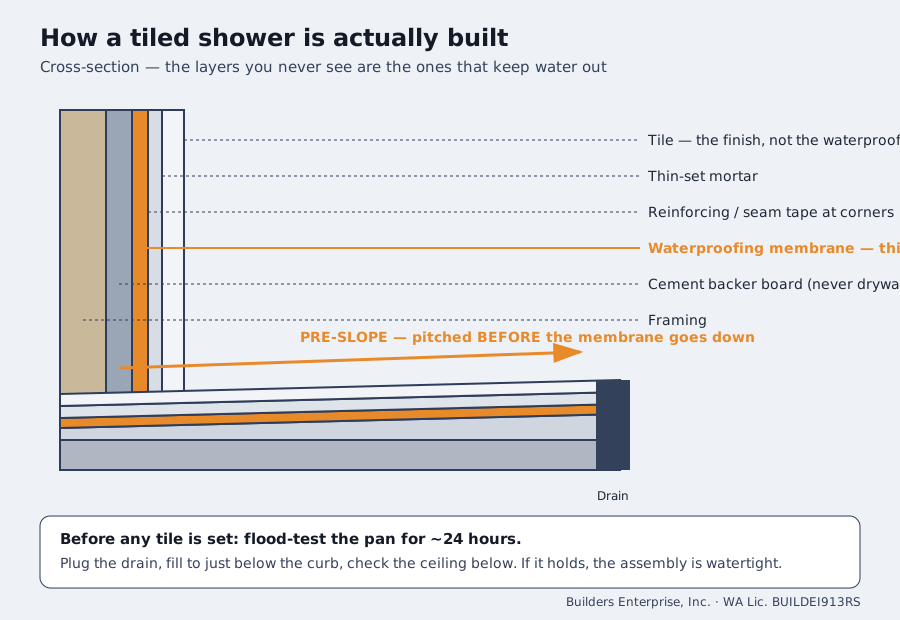
When a tiled shower fails, it almost never fails at the tile. It fails because of what was, or was not, underneath it. This page explains how a shower is actually built to last, so you can judge any contractor’s answer — including ours.
Tile is a finish, not a waterproofing system
This is the single most misunderstood thing in bathroom remodeling. Tile and grout are not waterproof. Grout is porous by design. Water passes through a tiled surface routinely and always has. The job of the tile is to be walked on, cleaned and looked at. The job of keeping water out of your framing belongs to a membrane that you will never see once the job is done.
When someone tells you they will “seal the grout” and that will handle it, that is the answer of a person who does not build showers. Sealer reduces staining. It does not make an assembly watertight.
What actually has to be right, in order
1. The substrate
Drywall does not belong in a shower. Neither does standard greenboard, which is moisture-resistant, not waterproof, and turns to oatmeal when it gets wet repeatedly. A shower needs cement board, a foam backer board, or an equivalent. If a bid does not say which one, ask.
2. The pan and the pre-slope
Water has to run downhill to the drain, and it has to run downhill at the membrane level, not just at the tile level. That means the slope has to be built into the base before the waterproofing goes down, then the membrane follows that slope, then the mortar bed and tile follow it again. A pan built flat under a sloped tile surface holds standing water against the membrane permanently. That is the classic failure, and it is invisible for years.
3. The waterproofing membrane
Two accepted approaches: a bonded sheet membrane applied over the substrate, or a liquid-applied membrane rolled or troweled to a specified thickness. Both work when installed to the manufacturer’s system. Mixing brands and components across systems is where warranties and performance both quietly disappear.
4. The corners, seams and penetrations
This is where showers actually leak. Inside corners move. Curbs get drilled. The mixing valve and shower arm are holes punched straight through your waterproofing. Every one of those needs the manufacturer’s corner piece, seam tape or sealing collar, installed the way the system specifies. This is slow, unglamorous work that nobody photographs, and it is the difference between a shower that outlasts its tile and one that rots framing.
5. Cure time
Membranes cure. Mortar cures. Both need their time before the next step goes on top. Rushing this is the most common way a well-specified shower still fails, and it usually happens because someone promised a finish date they could not hold.
How to test whether a shower was built correctly
Before a single tile goes on, a properly built shower pan gets flood-tested: the drain is plugged, the pan is filled with water to just below the curb, and it sits for 24 hours while somebody checks the ceiling below. If it holds, it is watertight. If it does not, it is far cheaper to know now.
Ask any contractor bidding your bathroom whether they flood-test the pan and for how long. The answer tells you a great deal, very quickly.
Curbless and linear-drain showers
Curbless showers are one of the most requested features we get asked about, and they are also the least forgiving. Removing the curb removes the thing that was containing the water, so the waterproofing has to extend well past the shower opening and into the bathroom floor, and the floor framing usually has to be recessed so the finished shower floor sits level with the room. In a home with a concrete slab, or with joists running the wrong direction, that recess is a real structural conversation, not a finish detail.
Linear drains make the slope geometry simpler — the floor pitches in one direction rather than four — but they demand a longer, straighter, flatter run of substrate. Done properly, a curbless shower is the best thing you can put in a bathroom you intend to age in. Done casually, it is a leak with a nice view.
Where older Puget Sound homes complicate this
A large share of Seattle’s single-family housing predates 1940, and much of Renton, Kent and the Eastside predates 1980. In those homes we routinely open a bathroom and find the original mud-set shower over a lead or copper pan, framing that has been wet long enough to have lost strength, subfloor that is no longer flat, and a drain in a location that will not accept a modern assembly without moving plumbing. None of that is a disaster. All of it is a reason the estimate should be written after we look, not before.
What we do
Our owner spent years in natural stone and tile fabrication before general contracting, so shower assemblies are the part of a bathroom we are least willing to rush. We build the pre-slope, install a single manufacturer’s membrane system with its own corners and collars, flood-test before tile, and give cure times the days they need. If a schedule cannot accommodate that, we would rather tell you at the estimate than discover it at the deadline.
One of our public Google reviews is from the owner of a competing tile company who hired us to correct a job his own crew could not complete. We think that is the most useful thing we can tell you about how we build a shower. You can read it here.
Questions we get
Is grout waterproof?
No. Grout is porous by design, and sealing it reduces staining rather than making it watertight. Waterproofing is a membrane installed beneath the tile. Any shower relying on grout to keep water out will eventually fail.
What is a pre-slope and why does it matter?
Pre-slope is the pitch built into the shower base before the waterproofing membrane goes down, so water reaching the membrane drains rather than pooling. A pan built flat beneath sloped tile traps standing water against the membrane permanently. It is one of the most common causes of long-term shower failure.
Do you flood-test shower pans?
Yes. We plug the drain, fill the pan to just below the curb and let it sit roughly 24 hours while we check below before any tile is set. It is cheap insurance and it is the only way to know the assembly is watertight rather than assume it.
Can you build a curbless shower in an older home?
Often, yes, but it depends on the floor structure. A curbless shower needs the floor recessed so the finished shower is level with the room, which means looking at joist direction, depth and span. In a slab-on-grade home it is a bigger conversation. We assess it before quoting rather than after.
How long should a properly built tiled shower last?
With correct substrate, pre-slope, a complete membrane system and proper cure times, a tiled shower should outlast its tile. Failures usually trace back to waterproofing shortcuts rather than to the tile or the homeowner.
My shower is leaking. Can it be repaired, or does it need rebuilding?
It depends entirely on whether the membrane failed or something above it did. A cracked grout line or failed silicone joint can be repaired. A failed pan or membrane cannot be patched from the surface in any way that lasts, and anyone offering to is buying you a year or two. We will tell you honestly which one you have.
Planning a shower or fixing one that failed?
We will look at what is actually there and tell you honestly whether it needs a repair or a rebuild.