
Home Remodeling in Renton & the Puget Sound
Whole-home and multi-room remodels, run in the right order, by the crew that does the finish work itself.
The short answer
A remodel changes the layout — walls move, plumbing moves. A renovation updates what is already there without changing it. Remodels fail on sequence rather than on craftsmanship: the expensive mistake is starting demolition before cabinetry and stone are ordered, which leaves the house open waiting on deliveries. Budget is driven mainly by whether walls move, whether plumbing moves, electrical capacity, cabinetry and stone selections, and what is behind the walls in pre-1980 housing.

A whole-home remodel is a different animal from a kitchen or a bathroom. It is not three projects run at once — it is one project with a sequence, and the sequence is what separates a remodel that finishes on time from one that eats a year of your life. This page explains how we run them, what actually drives the cost, and what to ask anyone you are considering.
What counts as a home remodel
People use the words differently, so here is how we use them:
- Whole-home remodel — most or all of the interior rebuilt: kitchen, baths, flooring throughout, often walls moved, electrical and plumbing brought current. The house is usually vacant for part of it.
- Multi-room remodel — kitchen plus the main-level baths, or a primary suite plus the living space. The most common project we do, and usually the best value per dollar.
- Renovation — restoring or updating what is there without significantly changing the layout. Cheaper, faster, and frequently the right answer.
- Addition — new square footage. A different permitting path and a different structural conversation.
Most people who call us saying “whole house” actually want a multi-room remodel, and part of the free walkthrough is figuring out which one you are really describing. Scoping a project accurately is the single cheapest thing you can do for your budget.
The sequence, and why it matters more than the crew size
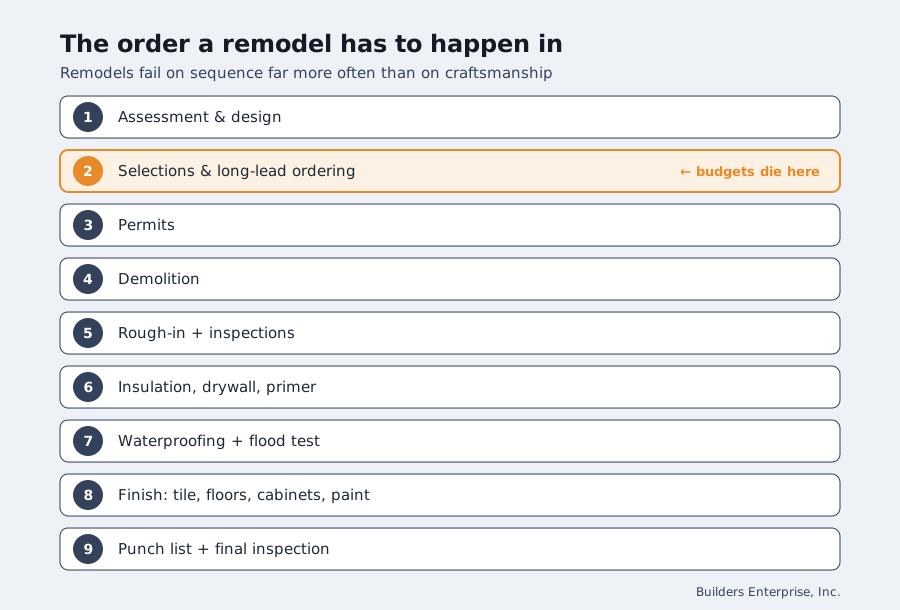
Remodels do not go badly because someone tiled slowly. They go badly because work happened out of order and then had to be undone. The order is not negotiable and it is roughly this:
- Assessment and design — what the structure will allow, what the panel will support, where plumbing actually runs.
- Selections and long-lead ordering — cabinetry, stone, tile, fixtures. Weeks of lead time, sometimes months.
- Permits, where required.
- Demolition — and only now do you truly learn what is behind the walls.
- Rough-in — framing changes, electrical, plumbing, HVAC. Inspections.
- Close-in — insulation, drywall, primer.
- Waterproofing and substrate in wet areas. Flood-testing. Cure time that cannot be shortened.
- Finish — tile, flooring, cabinetry, stone, trim, paint, fixtures.
- Punch list and final inspection.
The expensive mistake almost always happens at step 2. If demolition starts before cabinets and stone are ordered, you end up with an open house waiting on a delivery truck, paying for a schedule nobody can use. We confirm delivery dates before we open anything.
What actually drives the budget
In rough order of impact, and none of these are surprising once someone says them out loud:
- Whether walls move. Removing a load-bearing wall means engineering, a beam, posts, and often foundation work below. It is the single largest swing in a remodel and it is decided on paper before anyone swings a hammer.
- Whether plumbing moves. Relocating a kitchen sink or a toilet drain is far more expensive than most people expect, especially over a crawlspace or slab.
- Electrical capacity. Older panels frequently cannot supply what a modern kitchen alone demands, let alone a whole house. A service upgrade is a real line item.
- Cabinetry and stone. The largest material cost in most remodels, and the item that governs the calendar.
- What is behind the walls. In pre-1980 homes: knob-and-tube, galvanized supply lines, framing that has been wet, subfloor that is out of level. This is why estimates written before demolition need honest contingencies rather than optimistic silence.
- Finish level. The same room can be built three ways at three prices with no change to the footprint.
Detailed breakdowns for the two rooms people ask about most: what changes the price of a kitchen and what drives bathroom remodel cost in the Seattle area.
What we self-perform, and why you should care
Many general contractors subcontract tile, stone and finish carpentry. We do not. Before general contracting, our owner spent years in natural stone and countertop fabrication, so the finish work — the part you touch and look at every day for twenty years — is done by the same crew that started the job.
That matters in a specific, practical way. A GC who subs out tile does not know whether the substrate under it was prepared correctly, because he was not there. He finds out when it fails. We build the assembly and the finish, which is why we can tell you exactly how a shower is waterproofed rather than promising that our guy handles it.
It also means one point of accountability. There is no round of finger-pointing between trades when something needs correcting, because it is all us.
Remodeling older Puget Sound homes
Most of the housing we work in was built before 1980, and a lot of Seattle before 1940. That shapes nearly every project in this region.
What we routinely find: kitchens built as closed-off service rooms with a single circuit; bathrooms added decades after the house with waterproofing that has reached the end of its life; framing that has settled enough that no floor is flat; drains positioned where a modern assembly will not accept them; bath fans ducted into the attic rather than outside, which in this climate grows mold on brand-new work within two winters.
None of that is a disaster and all of it is normal. What is not normal is a contractor acting surprised by it in week three. We wrote a guide on what is actually behind the walls in older homes here.
One thing to ask every contractor you interview: if your home was built before 1978, ask whether they are EPA Lead-Safe (RRP) certified. Federal law requires certified firms for renovation that disturbs painted surfaces in pre-1978 housing, and a great deal of Puget Sound housing qualifies. It is a fair question and the answer tells you how seriously a company takes compliance.
Permits
In Renton, residential permits go through the City’s Community and Economic Development department at the Permit Center, 1055 South Grady Way. As a general rule, you need a permit for structural changes and for electrical, mechanical or plumbing work; purely cosmetic work such as painting, non-structural flooring or cabinet refacing generally does not. Other cities in the region have their own thresholds and their own timelines.
We pull permits where the work requires them. We do not perform permitted work without a permit, and if a contractor offers to save you money by skipping one, understand that the savings are borrowed against the day you sell the house. More detail in our guide to remodel permits in King County.
Living in the house during a remodel
Usually possible, occasionally not, and worth deciding deliberately rather than by default. A multi-room remodel with one working bathroom left intact is livable. A whole-home remodel with the electrical panel being replaced is not.
Where you do stay, containment is what makes it tolerable: sealed work zones, protected routes in and out, daily cleanup, and agreed start times. Over eight or ten weeks that is worth more to most families than any finish upgrade.
Where we work
We are based in Renton and work throughout the Puget Sound — King, Snohomish, Pierce, Kitsap, Skagit and Island counties.
RentonSeattleBellevueKentTacomaAll service areas →
Go deeper by room
Kitchen remodeling · Bathroom remodeling · Tile & natural stone installation · Everything we do · How we run a project, step by step
Questions we get
What's the difference between a remodel and a renovation?
A renovation updates or restores what is already there without significantly changing the layout. A remodel changes the layout — walls move, plumbing moves, rooms get reconfigured. Renovation is cheaper and faster, and for a lot of houses it is the better answer. We will tell you which one your project actually is.
How long does a whole-home remodel take?
Longer than the room-by-room math suggests, because of sequencing, inspections and cure times that cannot be compressed. The honest answer for any specific house comes after we walk it. What we can promise is that the schedule you get from us accounts for material lead times rather than ignoring them.
Can I live in the house during the remodel?
For a multi-room remodel, usually yes, provided one bathroom stays functional. For a true whole-home remodel with panel and plumbing work, usually no. It is worth deciding this deliberately at the estimate rather than discovering it in week two.
Do you handle permits?
Yes, where the work requires them. In Renton that runs through the city's Community and Economic Development permit center. Structural, electrical, mechanical and plumbing work generally requires a permit; purely cosmetic work generally does not. We do not perform permitted work without one.
Do you sub out the tile and finish work?
No. Tile, natural stone and finish carpentry are self-performed by our own crew. Our owner spent years in stone and countertop fabrication before general contracting, and the finish work is the reason people hire us not something we hand to a stranger.
What should be in a remodeling estimate?
A clear written scope, named products for anything that matters (especially the waterproofing system), a payment schedule, and written contingencies for anything that cannot be known until demolition.
How do I check that a contractor is licensed in Washington?
Search their registration number at secure.lni.wa.gov/verify. It shows registration status, bond and insurance. Ours is BUILDEI913RS. Washington law requires the number to appear in advertising, so a contractor who will not give you one is telling you something.
Do you do commercial work?
Yes — tenant improvements, unit turnovers and build-outs for businesses and property managers, scheduled around your operating hours where needed.
Thinking about remodeling?
Free walkthrough, free written estimate, and a straight answer about what your house will and won't allow.